
The Moral Roots of Liberals and Conservatives
by Jonathan Haidt
TED200819 min
Jonathan Haidt studies the five moral values that form the basis of our political choices.
Tarot Mapping
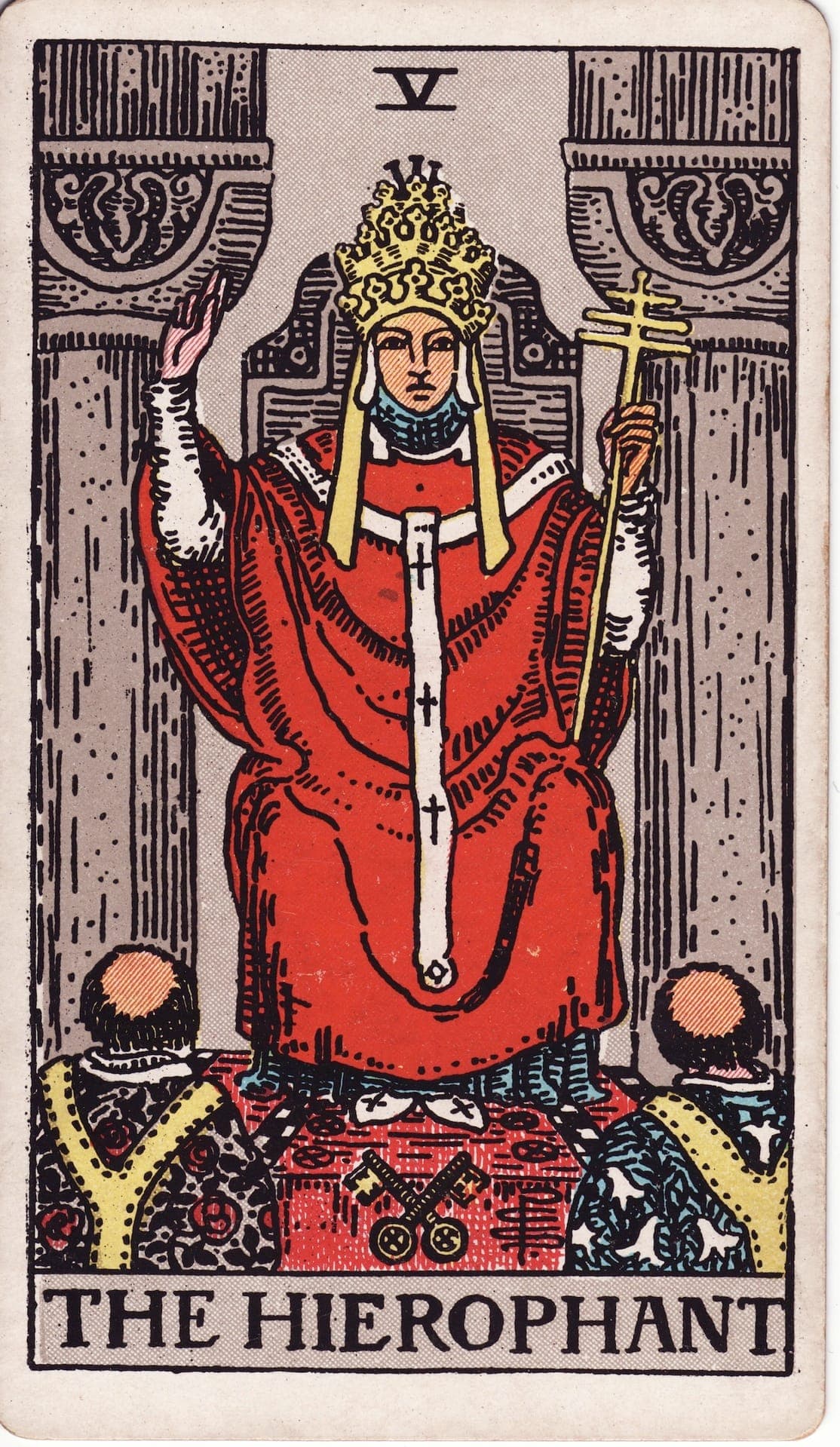
The Hierophant
The Hierophant acts as a bridge between the divine and the human, representing established traditions, spiritual teachings, and the structures of belief. He signifies the importance of learning from history and finding meaning within a community or system.
traditionspiritual guidanceconformityeducationinstitutionsbelief systemsmentor
Why This Mapping?
The Hierophant teaches traditional wisdom and moral “sacred order” underneath politics: the inherited values, institutions, and group-binding instincts (loyalty, authority, sanctity) that shape what people experience as “good” and “right.” Haidt examines how spiritual and ethical systems shape our understanding.
▶READ MORE ABOUT WHY THIS MAPPING...
1) The talk’s core move is Hierophant work: revealing the hidden moral liturgy
The Hierophant is the archetype of meaning-making through shared norms...the stories, institutions, and rituals that bind a community into “we.” Haidt is doing classic Hierophant work by naming the moral foundations that sit beneath policy preferences, and showing that left/right conflict often isn’t about facts first...it’s about which moral pillars a group treats as sacred.
2) “Binding” foundations = the Hierophant’s home turf
In Moral Foundations Theory, some moral concerns function to protect individuals (like care and fairness), while others help bind groups together (like loyalty, authority, and sanctity). That “binding” set is basically a Hierophant triad:
> Loyalty / Ingroup → belonging, duty, “our people”
> Authority / Respect → legitimate hierarchy, tradition, elder-wisdom
> Sanctity / Purity → what a culture treats as untouchable, taboo, holy
The talk’s power is that it doesn’t frame these as “stupid” or “evil.” It frames them as human (evolved, patterned, culturally intensified) and therefore worth understanding if we want a functioning society. That is Hierophant medicine: “Learn the code before you condemn the cathedral.”
3) The Hierophant as translator between tribes
A big subtext of the talk is: civility requires moral bilingualism. The Hierophant is the bridge figure who can stand inside a worldview and explain it from the inside...without instantly trying to overthrow it. Haidt is asking us to recognize that other people’s moral maps are coherent to them, and that contempt is often just “untranslated sacredness.”
4) Shadow Hierophant, named gently but clearly
This talk also points at the Hierophant’s shadow: when moral systems become rigid, tribal, or weaponized—when “the sacred” becomes a bludgeon, and authority becomes immune to critique. Political polarization thrives when each side treats its own moral emphases as obviously universal and the other side’s as obviously corrupt. The Hierophant card holds that tension: tradition can guide… and tradition can trap.
5) What TarotTALKS can say this talk gives the audience
If you map this talk to The Hierophant, the “gift” is a practical spiritual practice for democracy:
> Respect the moral ecosystems you didn’t grow up in.
> Notice your own sacred objects (the values you treat as non-negotiable).
> Stop assuming disagreement means stupidity. It often means different moral weighting.
That’s Hierophant energy at its best: humility before the complexity of shared life.
Reflection Questions
- •What traditions or beliefs am I following out of habit rather than conviction?
- •How can I seek guidance or mentorship for my current situation?
- •Where do I need to challenge the status quo and find my own truth?