Does Money Make You Mean?

Paul Piff

TarotTALKS
Does Money Make You Mean?

Does Money Make You Mean?

by Paul Piff

TEDxMarin201316 min

Paul Piff shares research that shows how wealth can make people less compassionate and more entitled.

Tarot Mapping
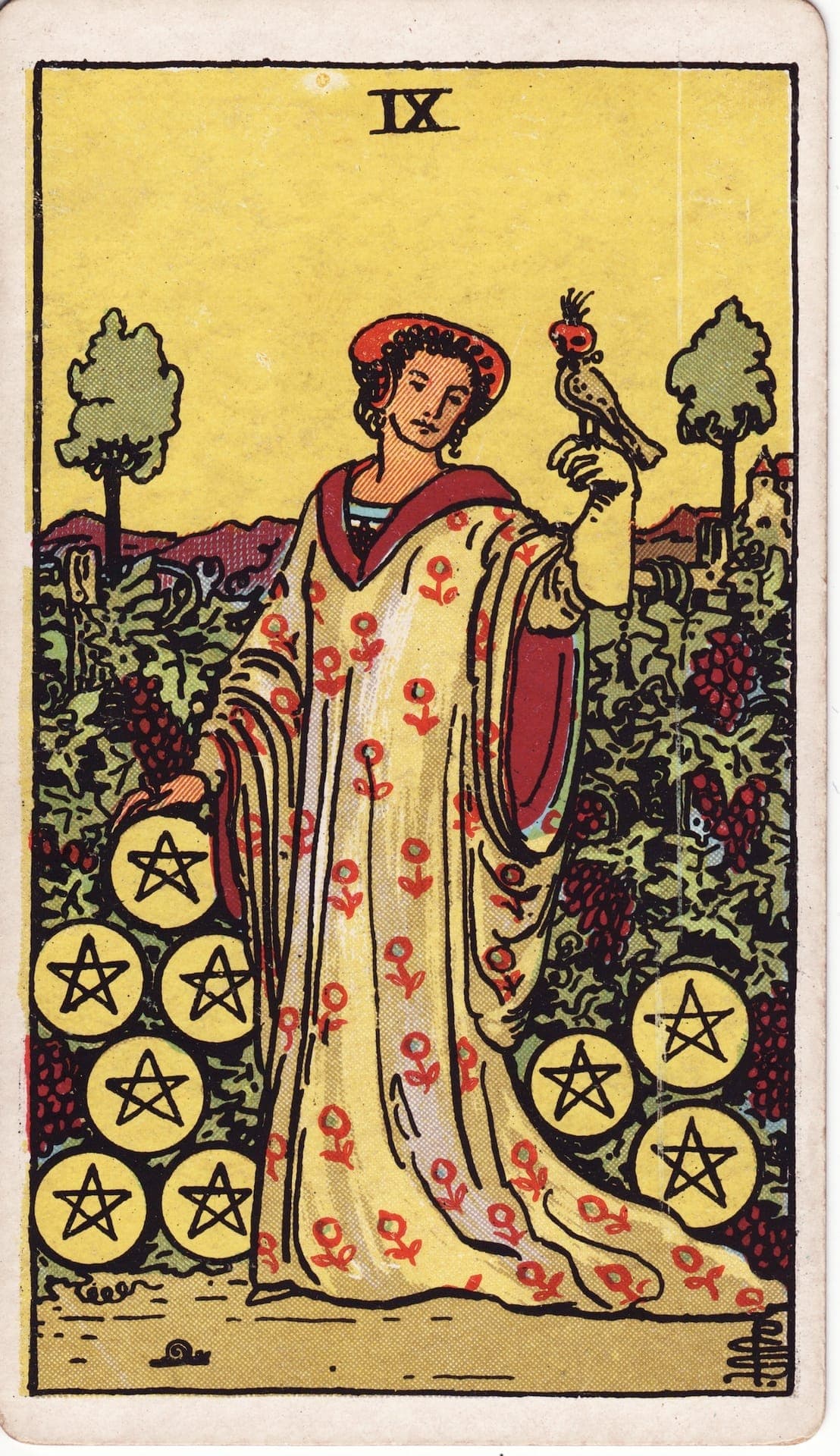
Nine of Pentacles

Nine of Pentacles

The enjoyment of material success and independence, achieved through discipline and self-reliance.

independenceluxuryself-sufficiencyrefinementdisciplineenjoymentsolitude

Why This Mapping?

Paul Piff's maps to the Nine of Pentacles because it examines what happens when comfort, security, and elevated status become a lived environment that shapes perception, behavior, and relational tone. The Nine of Pentacles carries themes of independence and material ease, and the talk explores how that ease can quietly shift people toward self-focus, reduced attunement, and a “protected garden” mindset where empathy and generosity can diminish.

READ MORE ABOUT WHY THIS MAPPING...
The Nine of Pentacles is the archetype of self-sufficiency earned or inherited, a life arranged for stability, control, and refinement. It is the garden, the boundary, the curated world where one’s needs are met and one’s choices expand. Paul Piff’s talk looks directly at how money and the experience of higher social class can function like that garden, a buffering layer that changes what people notice, how they interpret situations, and how they treat others. When resources feel abundant and personal risk feels low, it becomes easier to move through the world with fewer relational “checks,” fewer moments that require mutuality, and fewer consequences for small acts of disregard. That is a Nine of Pentacles lesson: the environment of security can become a subtle training ground for independence that drifts into disconnection. In classic imagery, the Nine of Pentacles often includes a figure who stands alone, composed, surrounded by signs of prosperity, with a sense of separation from the wider village. The talk mirrors that aloneness in psychological form. Wealth can reduce reliance on community, which reduces the daily practice of reciprocity. When someone rarely needs help, they get fewer invitations to practice gratitude, patience, or sensitivity to inconvenience. The talk’s examples and studies point toward that shift: advantage can make a person feel more entitled, more deserving, and more willing to bend norms when it serves them. That aligns with the Nine’s shadow: the line where independence hardens into superiority, where comfort becomes insulation, and where a person’s “mine” grows stronger than their “ours.” The Nine of Pentacles also carries the theme of enjoyment, the right to savor the fruits of work, and the dignity of personal agency. This talk complicates that dignity by showing how quickly the felt experience of advantage can alter ethics and empathy, even when the advantage is randomly assigned. In Nine of Pentacles terms, it is a warning about confusing comfort with character. The card asks for stewardship of one’s good fortune, including the responsibility to stay relationally awake. Piff’s message functions like a mirror held up inside the garden: when life is easier, the moral muscles can atrophy unless they are deliberately exercised. Finally, the Nine of Pentacles speaks to boundaries and self-possession. The talk adds a crucial nuance: boundaries can become walls that limit perspective. When money allows a person to outsource inconvenience and avoid vulnerability, their worldview can shrink while their confidence grows. Mapping the talk to the Nine of Pentacles frames the central tension as a choice about how to inhabit prosperity. Comfort can become a platform for generosity and civic care, or it can become a private estate of perception where other people fade into the background. The talk is a call to consciously practice humility and empathy inside privilege, so abundance remains a blessing that circulates rather than a garden that closes.

Reflection Questions

  • Where in my life do I feel most independent and self-sufficient?
  • How can I better enjoy the abundance I have already created?
  • Am I sacrificing my freedom for material security?
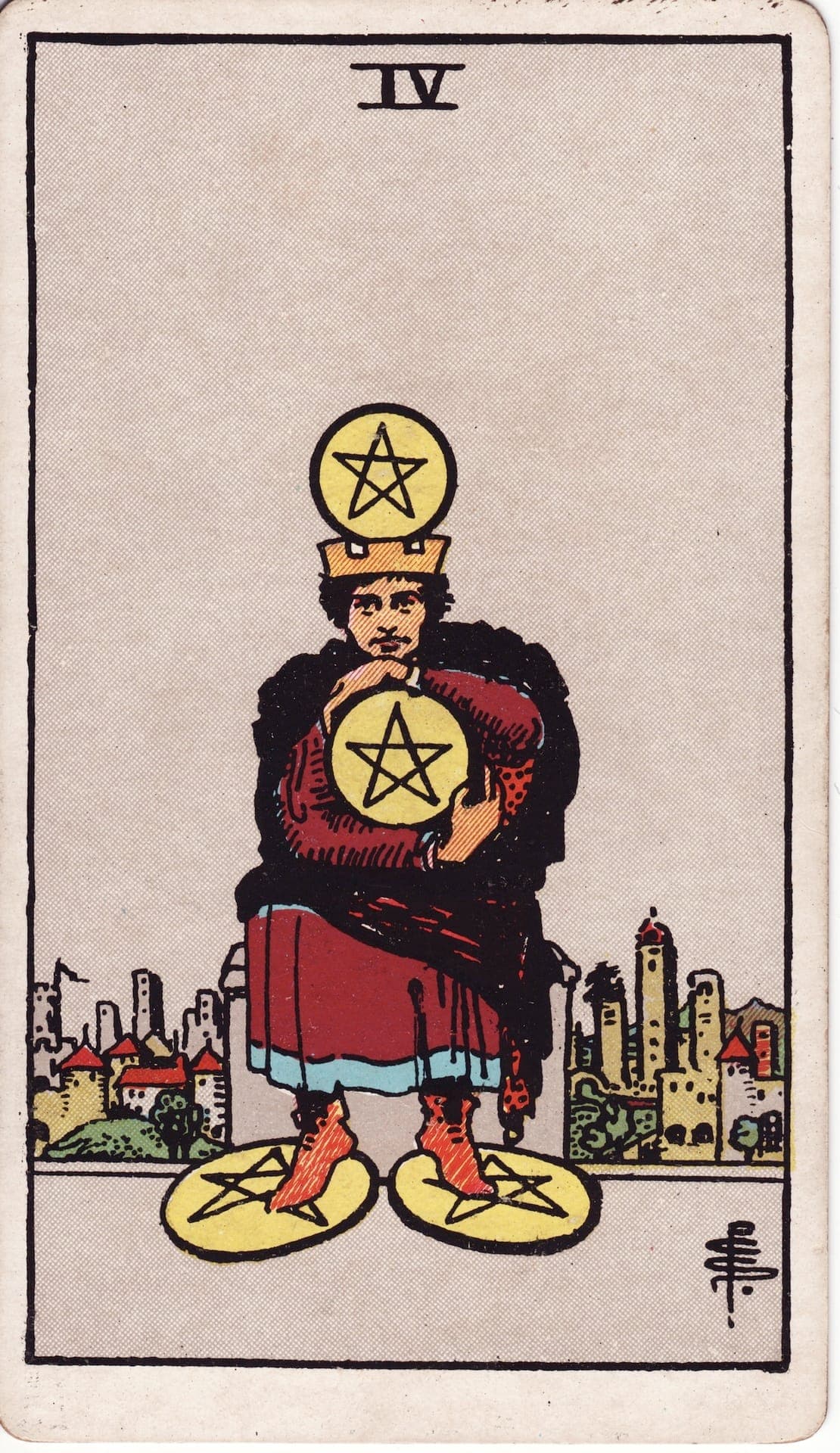
Four of Pentacles

Four of Pentacles

The desire to hold onto resources and maintain stability, often leading to rigidity or a fear of loss.

securitypossessioncontrolstabilityboundariesconservatismblocking

Why This Mapping?

The Four of Pentacles is traditionally known as the "miser card," depicting a figure who possesses material wealth but is "impoverished because of his or her attitude". The card illustrates the psychological trap Piff describes: a state where "scarcity issues are running the show" despite financial abundance, leading the individual to block off their heart and hoard resources rather than connecting with the community.

READ MORE ABOUT WHY THIS MAPPING...
1. The Blocking of Empathy (The "Compassion Gap") Piff argues that as wealth increases, compassion and empathy decrease. In the Four of Pentacles, the central figure is depicted holding a golden coin tightly over their chest. This visual symbolism suggests the figure is "attempting to cover the heart with a shield of gold". By placing material wealth over the heart center, the figure blocks their ability to connect emotionally with others, mirroring Piff’s findings that wealthier individuals are less able to read others' emotions and are less compassionate. 2. Self-Interest and Hoarding Piff’s "Monopoly study" showed that privileged players hoarded resources and acted out of self-interest. The Four of Pentacles signifies "cleaving to that which one has". It represents a person who is "too possessive" over their material wealth. The sources note that this card often appears when "greed, anxiety, and fear" drive a person to hold onto their possessions "so tightly that they can’t make a move". This directly correlates to the "ideology of self-interest" Piff observed in wealthier participants. 3. Isolation from Society In the talk, Piff notes that wealth can isolate individuals from the social contract. The imagery of the Four of Pentacles shows a figure seated apart from the city behind him, "excluding others through his need for personal security". The figure is "so dedicated to staying glommed onto their money" that they separate themselves from the community. This reflects the "miserly attitude" that prevents the wealthy individual from finding happiness through connection. 4. The Solution: Generosity Finally, Piff concludes his talk by suggesting that small "nudges" toward cooperation can restore empathy. The lesson of the Four of Pentacles aligns with this conclusion. The card serves as a warning that the Seeker "must detach from yearnings for earthly power" and is "urged to be more openhearted". The antidote to the state of the Four of Pentacles is to realize that "money is energy" to be shared and recycled, rather than hoarded.

Reflection Questions

  • What am I holding onto so tightly that I cannot move?
  • Where do I need to establish better boundaries to feel secure?
  • How is my need for control limiting my growth?