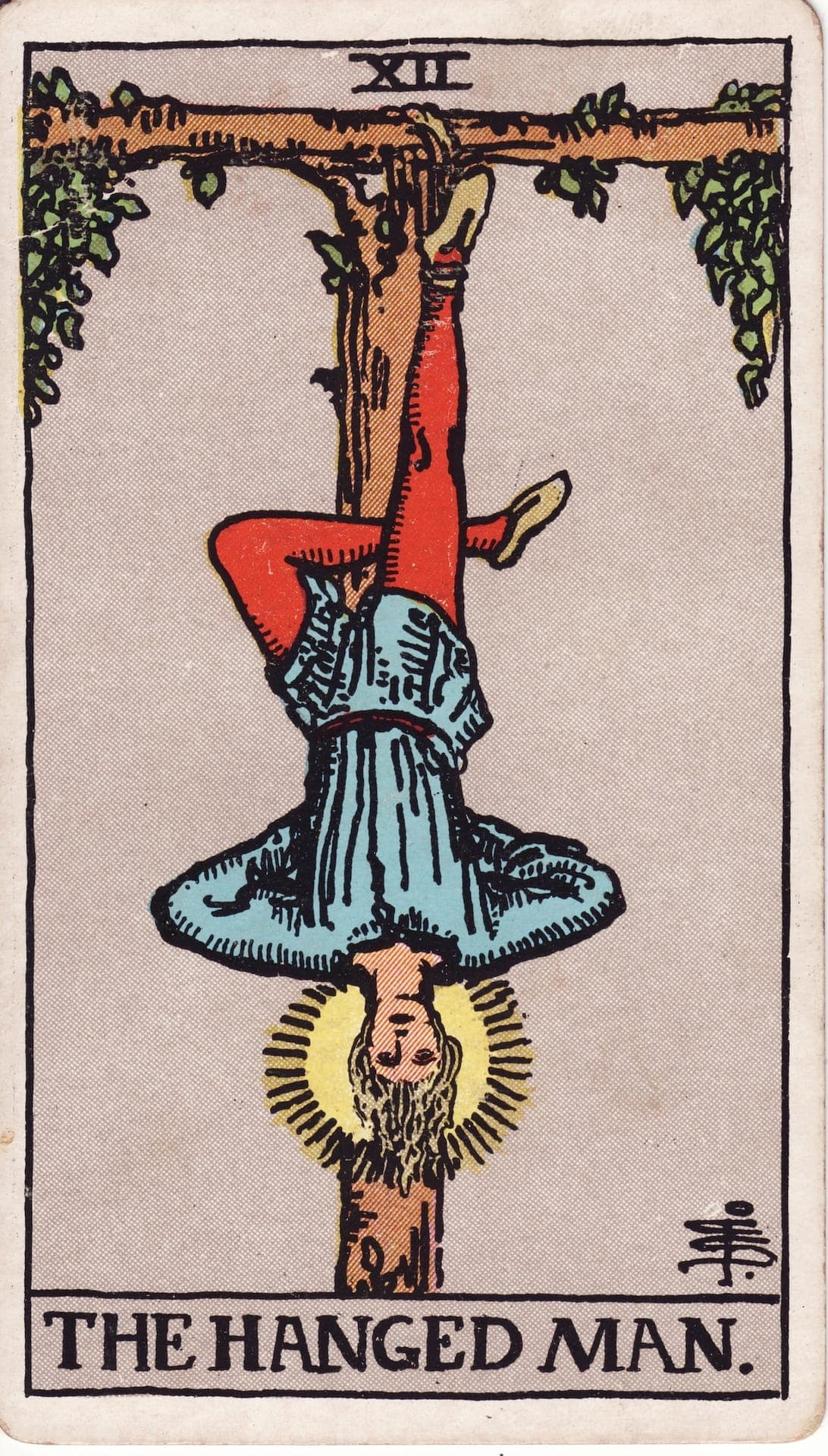
The Hanged Man

Major Arcana

TarotTALKS
The Hanged Man

The Hanged Man

The Hanged Man signifies a period of suspension and surrender, where letting go of control leads to a new perspective. It represents the necessary sacrifice of the ego to gain spiritual enlightenment.

surrendernew perspectivesacrificepauseletting gosuspensionenlightenment
Why heroes don't change the world
Featured Talk

Why heroes don't change the world

David LaMotte
202418 min

The Hanged Man fits LaMotte's talk because its core move is a deliberate inversion of perspective. Instead of treating change as something delivered by a singular heroic figure, the talk invites a pause that loosens our grip on the hero story and asks us to see impact through a different lens. The Hanged Man is the archetype of choosing to hang back, relinquishing the need to be the main character, and discovering that transformation arrives through reframing, patience, and a willingness to let outcomes emerge from collective conditions rather than individual glory.

READ MORE ABOUT WHY THIS MAPPING...
The Hanged Man is the moment where forward motion stops being the goal and clarity becomes the goal. In this talk, the invitation is to step out of the momentum of hero-worship, a cultural habit that can feel energizing because it promises a simple plot and a single champion. The Hanged Man asks for a different kind of courage, the courage to suspend the familiar story long enough to see what it has been doing to us. When we cling to the hero frame, we tend to scan for saviors, measure progress by dramatic turning points, and overlook the slow, relational work that actually changes systems. The Hanged Man shifts the measurement from spectacle to substance and from individual action to shared conditions. This mapping also carries the Hanged Man’s theme of voluntary sacrifice. It is a sacrifice of ego and of narrative convenience. The talk’s reorientation asks listeners to give up the emotional payoff of believing that one extraordinary person will arrive, take the burden, and deliver resolution. That relinquishment can feel like discomfort, grief, or even boredom, because the hero story is a stimulant. The Hanged Man is comfortable in that discomfort. He treats it as a necessary threshold where attachments loosen, attention deepens, and a more mature relationship with change becomes available. The Hanged Man is also a card of liminality, the in-between space where you stop performing certainty and start practicing discernment. This talk lives in that in-between. It encourages an internal reset in how responsibility is held. It nudges the listener to ask what happens when we stop outsourcing our agency to admired figures and instead become participants in the conditions that make change possible. Participation looks like collaboration, mutual support, building trust, staying in the work when it is unglamorous, and learning to value incremental progress. Those are Hanged Man values: presence, humility, and willingness to let a larger pattern shape the next step. Finally, the Hanged Man carries an important paradox: what looks like stillness can be potent action. By choosing to invert the frame, the talk clears a path for more sustainable engagement. It encourages people to stop chasing a single dramatic answer and to invest in networks, practices, and shared leadership. That is the Hanged Man’s gift, the recognition that the most meaningful movement sometimes begins when we stop pushing, allow a perspective to turn over, and let a wiser kind of change take root.
Shared on3w3w3w